
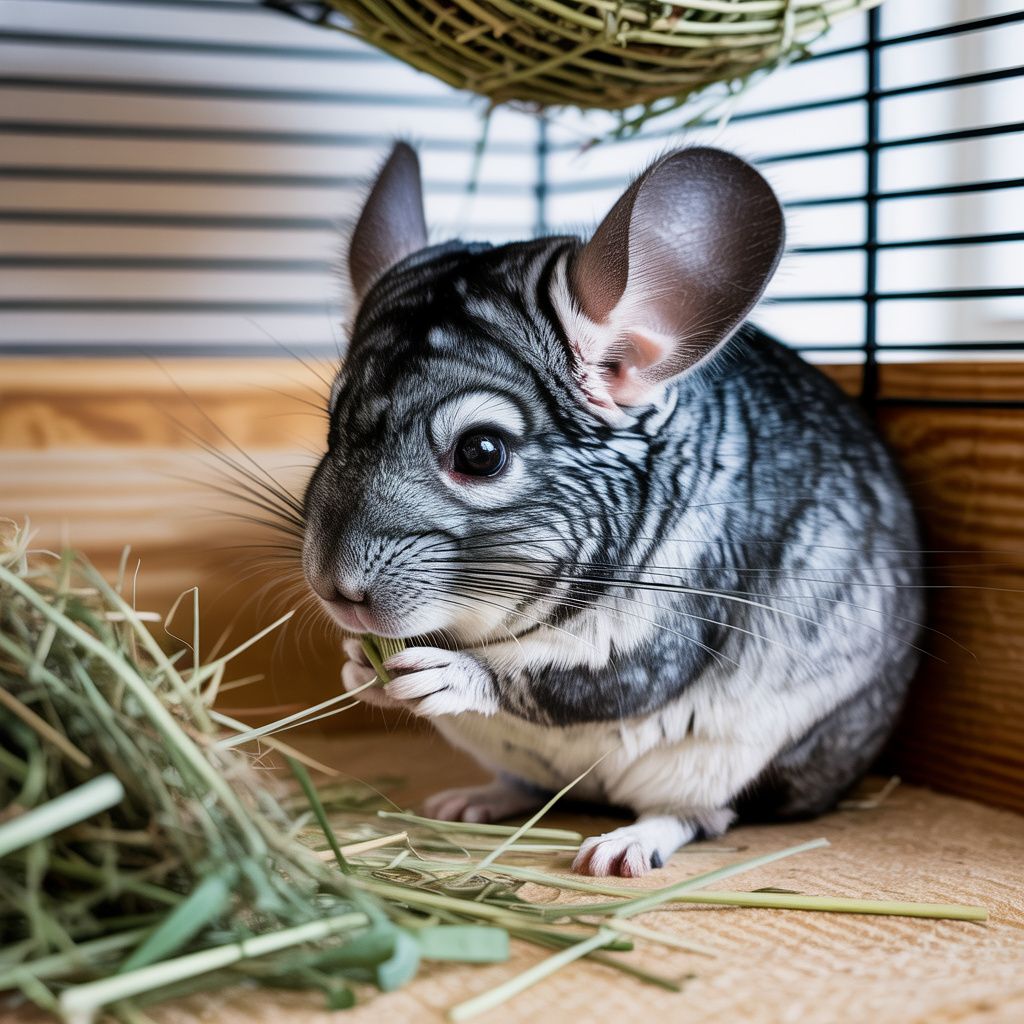
Introduktion till Metabolism & Energi hos Chinchillas
Metabolism är den uppsättning kemiska processer som sker i en chinchillas kropp för att upprätthålla livet, inklusive att omvandla mat till energi, bygga och reparera vävnader samt eliminera avfall. För chinchillaägare är det viktigt att förstå metabolism och energibehov för att säkerställa att deras husdjur mår bra och är vitala. Chinchillas är små, aktiva gnagare med en hög metabolisk hastighet, vilket betyder att deras kroppar bearbetar energi snabbt för att stödja deras energiska livsstil och upprätthålla kroppstemperaturen. Den här artikeln utforskar hur metabolism fungerar hos chinchillas, deras energibehov och praktiska sätt att stödja deras behov.
Hur Metabolism Fungerar hos Chinchillas
Chinchillas har en snabb metabolism anpassad till deras naturliga miljö i Anderna, där mat kan vara knapphändig och temperaturerna svala. Deras kroppar är utformade för att utvinna maximal energi från en kost rik på fibrer, som gräs och hö. Metabolism bryter ner näringsämnen från maten till användbar energi genom två huvudprocesser: katabolism (nedbrytning av molekyler för att frigöra energi) och anabolism (användning av energi för att bygga och reparera vävnader). En chinchillas matsmältningssystem är specialiserat för att bearbeta fiberrika livsmedel, med ett stort blindtarm som jäser växtmaterial för att utvinna näringsämnen.
På grund av deras höga metaboliska hastighet behöver chinchillas en konstant tillgång till mat för att driva sina kroppar. I genomsnitt behöver en vuxen chinchilla som väger 400–600 gram cirka 20–30 gram hö dagligen, tillsammans med 1–2 matskedar högkvalitativa pellets, för att tillgodose deras energibehov. Utan tillräcklig näring kan deras metabolism sakta ner, vilket leder till hälsoproblem som letargi eller matsmältningsstillestånd.
Energibehov och Aktivitetsnivåer
Energibehoven hos chinchillas är nära kopplade till deras aktivitetsnivåer, ålder och miljö. Dessa nattaktiva djur är mest aktiva på natten, ofta springer, hoppar och leker i timmar. Denna höga aktivitetsnivå förbränner en betydande mängd energi, så de behöver en kost som ger hållbar bränsle. Unga chinchillas och dräktiga eller digivande honor har ännu högre energibehov på grund av tillväxt och reproduktion.
Temperatur spelar också en roll för energiförbrukningen. Chinchillas trivs i svala miljöer (idealiskt 60–70°F eller 15–21°C) eftersom deras tjocka päls kan orsaka överhettning. Om temperaturen överstiger 75°F (24°C), kan deras metabolism ha svårt att reglera kroppsvärmen, vilket leder till stress eller värmeslag. Att hålla deras boende svalt hjälper till att minska onödig energiförlust och stödja metabolisk balans.
Stödja Frisk Metabolism med Kost
En balanserad kost är grunden för en frisk metabolism hos chinchillas. Större delen av deras kost bör bestå av obegränsat, färskt timotejhö, som ger fibrerna som behövs för matsmältning och energi. Undvik söta godisar eller fettrika livsmedel som nötter och frön, eftersom dessa kan störa deras metabolism och leda till fetma eller leverproblem. Erbjud istället små mängder säkra, låg-socker-godisar som torkade nypon eller en bit äpple (högst en gång i veckan).
Vatten är lika viktigt för metaboliska processer. Se till att din chinchilla har tillgång till rent, färskt vatten dagligen via en droppflaska för att förhindra uttorkning, som kan sakta ner metabolismen och orsaka matsmältningsproblem. Övervaka deras matintag – om de äter mindre än vanligt kan det signalera ett metaboliskt eller hälsoproblem, och ett veterinärbesök rekommenderas.
Praktiska Tips för Ägare
Här är några handlingsbara sätt att stödja din chinchillas metabolism och energinivåer:
- Erbjud en konsekvent kost: Håll dig till ett rutinmässigt utfodringsschema med obegränsat hö och uppmätta pellets för att undvika över- eller underutfodring.
- Uppmuntra motion: Erbjud en stor, säker bur med plattformar, hjul eller tunnlar för att främja aktivitet, vilket hjälper till att reglera metabolismen.
- Övervaka vikten: Väg din chinchilla månadsvis med en liten våg. Plötslig viktminskning eller viktökning kan indikera metaboliska problem.
- Håll temperaturen sval: Använd fläktar eller luftkonditionering vid behov för att upprätthålla en bekväm miljö och förhindra energitapp från överhettning.
- Håll utkik efter tecken på sjukdom: Letargi, minskad aptit eller lösa avföringar kan indikera en metabolisk nedgång eller matsmältningsproblem – kontakta veterinär omedelbart.
Slutsats
Att förstå metabolism och energibehov är essentiellt för att hålla din chinchilla frisk och glad. Genom att erbjuda en fiberrik kost, en sval och stimulerande miljö samt regelbunden övervakning kan du stödja deras snabba metabolism och höga energinivåer. Med rätt omsorg kommer din chinchilla att frodas och visa den livliga, nyfikna personligheten som gör dem till så underbara husdjur. Var alltid uppmärksam på förändringar i beteende eller aptit, eftersom dessa ofta är de första tecknen på att något kan vara fel med deras metaboliska hälsa.